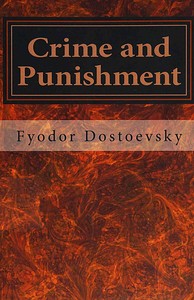
A student commits murder and is consumed by guilt — a psychological masterpiece.
Why this book matters
Dostoyevsky wrote Crime and Punishment while fleeing debt collectors — and produced one of the most psychologically devastating novels ever written.
Read the full Impact essay →
Free Audiobook · Chapter I
0:00 / —
On an exceptionally hot evening early in July a young man came out of the garret in which he lodged in S. Place and walked slowly, as though in hesitation, towards K. bridge. He had successfully avoided meeting his landlady on the staircase. His garret was…
💬 Books4Free AI Study Assistant
YOU
Why does Crime and Punishment matter?
AI
Dostoyevsky wrote Crime and Punishment while fleeing debt collectors — and produced one of the most psychologically devastating novels ever written.
Read or Listen to Crime and Punishment on Books4Free
Every chapter free to read. Free audio narration on the opening chapter. Plus an AI study assistant that knows the book.
Open in Books4Free →Character Guide
Spoiler-free — fuller detail (with spoilers, if you want them) lives in the reader's Guide tab.
- Rodion Romanovitch Raskolnikov (Rodya)
- An impoverished, proud former law student living in a cramped St. Petersburg garret, tormented by debt and a chilling theory about 'extraordinary' men who are permitted to transgress moral law. He murders an old pawnbroker early in the novel and spends the rest of the story in feverish inner turmoil.
- Sonia Marmeladov (Sofya Semyonovna)
- The gentle, devout daughter of a drunken former official, forced by her family's poverty into prostitution. She becomes an unlikely source of moral and spiritual reflection for Raskolnikov.
- Dmitri Prokofitch Razumihin
- Raskolnikov's cheerful, energetic, and fiercely loyal former fellow-student, who nurses him through illness and looks after his family when they arrive in Petersburg.
- Porfiry Petrovitch
- The shrewd, chatty examining magistrate assigned to the pawnbroker's murder case, known for his psychologically probing conversational style.
- Avdotya Romanovna Raskolnikov (Dounia)
- Raskolnikov's intelligent, proud, and self-sacrificing sister, who has come to Petersburg amid a planned marriage to the wealthy Luzhin.
- Pulcheria Alexandrovna Raskolnikov
- Raskolnikov's devoted, anxious mother, who travels to Petersburg full of hope for her son's future.
- Semyon Zaharovitch Marmeladov
- A ruined former civil servant and hopeless drunkard, Sonia's father, whom Raskolnikov meets in a tavern early in the novel.
- Katerina Ivanovna
- Marmeladov's proud, consumptive second wife, struggling to keep her children fed amid dire poverty.
- Pyotr Petrovitch Luzhin
- A pompous, self-important lawyer engaged to marry Dounia, whose motives seem more calculating than romantic.
- Arkady Ivanovitch Svidrigailov
- A wealthy, unsettling man from Dounia's past who arrives in Petersburg and takes a disturbing interest in her affairs.
- Alyona Ivanovna (the old pawnbroker)
- A miserly, disliked moneylender whose flat and habits Raskolnikov studies closely before the murder.
- Lizaveta
- Alyona Ivanovna's simple, gentle half-sister, who does odd work around the building.
- Zossimov
- A young doctor and friend of Razumihin who attends to Raskolnikov during his illness.
- Nastasya
- The landlady's servant who brings Raskolnikov tea and looks in on him, often chattering about neighborhood news.
Glossary
- Rouble / kopeck
- Units of Russian currency; small sums of roubles and kopecks are constantly at stake given the characters' extreme poverty.
- Examining magistrate
- A judicial official (like Porfiry Petrovitch) responsible for investigating a crime and questioning suspects before trial, combining detective and legal roles.
- Consumption
- The 19th-century term for pulmonary tuberculosis, the wasting disease afflicting Katerina Ivanovna.
- Penal servitude
- A sentence of forced labor in a prison camp, typically in Siberia, imposed on convicted criminals in Tsarist Russia.
- Dram-shop
- A cheap tavern or drinking house serving spirits, frequented by characters like Marmeladov.
- Yellow ticket
- The identity card issued to registered prostitutes in Tsarist Russia, referenced in connection with Sonia's forced trade.
- Hay Market (Sennaya)
- A crowded, poor marketplace square in St. Petersburg that serves as a recurring symbolic setting for Raskolnikov's wanderings and moments of crisis.
- Hypochondria
- Used in the 19th-century sense to mean a state of morbid melancholy, anxiety, or nervous illness rather than modern health-anxiety.
- Extraordinary man theory
- Raskolnikov's article/idea that certain great individuals have the right to transgress moral and legal law for the sake of humanity's progress, which underlies his rationale for murder.
Table of contents
- Chapter IFree
- Chapter IIFree
- Chapter IIIFree
- Chapter IVFree
- Chapter VFree
- Chapter VIFree
- Chapter VIIFree
- Chapter IFree
- Chapter IIFree
- Chapter IIIFree
- Chapter IVFree
- Chapter VFree
- Chapter VIFree
- Chapter VIIFree
- Chapter IFree
- Chapter IIFree
- Chapter IIIFree
- Chapter IVFree
- Chapter VFree
- Chapter VIFree
- CHAPTER I: “Can this be still a dream?” Raskolnikov thought once more.Free
- Chapter IIFree
- Chapter IIIFree
- Chapter IVFree
- Chapter VFree
- Chapter VIFree
- Chapter IFree
- Chapter IIFree
- Chapter IIIFree
- Chapter IVFree
- CHAPTER V: Lebeziatnikov looked perturbed.Free
- Chapter IFree
- Chapter IIFree
- Chapter IIIFree
- Chapter IVFree
- CHAPTER V: Raskolnikov walked after him.Free
- Chapter VIFree
- Chapter VIIFree
- Chapter VIIIFree
Every chapter is free to read. Premium unlocks the full audiobook.